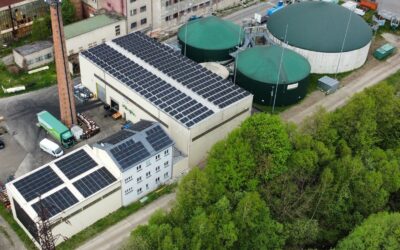
Food scraps, peels, and expired food, if sorted correctly, do not have to be waste, but can be used as raw material for the production of low-emission biomethane, electricity, and heat. For almost ten years, Energy financial group (EFG) has been developing and operating biogas stations in Czechia – specialized facilities for processing this type of waste. In addition, it equips them with an upgrading unit, a technology that can convert biogas into biomethane. This can be used in the conventional gas distribution system and as BioCNG and BioLNG, advanced fuels for the transport sector. Learn about the entire process, which, in the spirit of the circular economy, converts waste into green energy.
Table of Contents
Every day, tonnes of food waste are generated in kitchens, restaurants, and canteens, but often end up unnecessarily in black bins for mixed waste. This waste accounts for up to a third of their contents. However, if they are disposed of correctly, i.e., in special brown bins designated for food waste, they can be a source of renewable energy. Waste sorting thus becomes an opportunity to reuse discarded food that is unfit for consumption.
It all starts with sorting
The journey of properly utilized food waste, or biodegradable waste with animal components, begins in the kitchen—at home, in a restaurant, school cafeteria, or food production facility. If this waste ends up in a landfill, it decomposes and releases methane, a gas that has up to twenty times the warming effect of carbon dioxide in the Earth’s atmosphere. By properly sorting waste into brown containers for food waste, which includes food scraps, peels, expired food, shells, and coffee and tea grounds, we reduce the amount of harmful emissions that escape into the air and at the same time reduce the volume of landfills. These special bins are designed to minimize the spread of odors. They are equipped with a sealing lid and are regularly collected and cleaned.
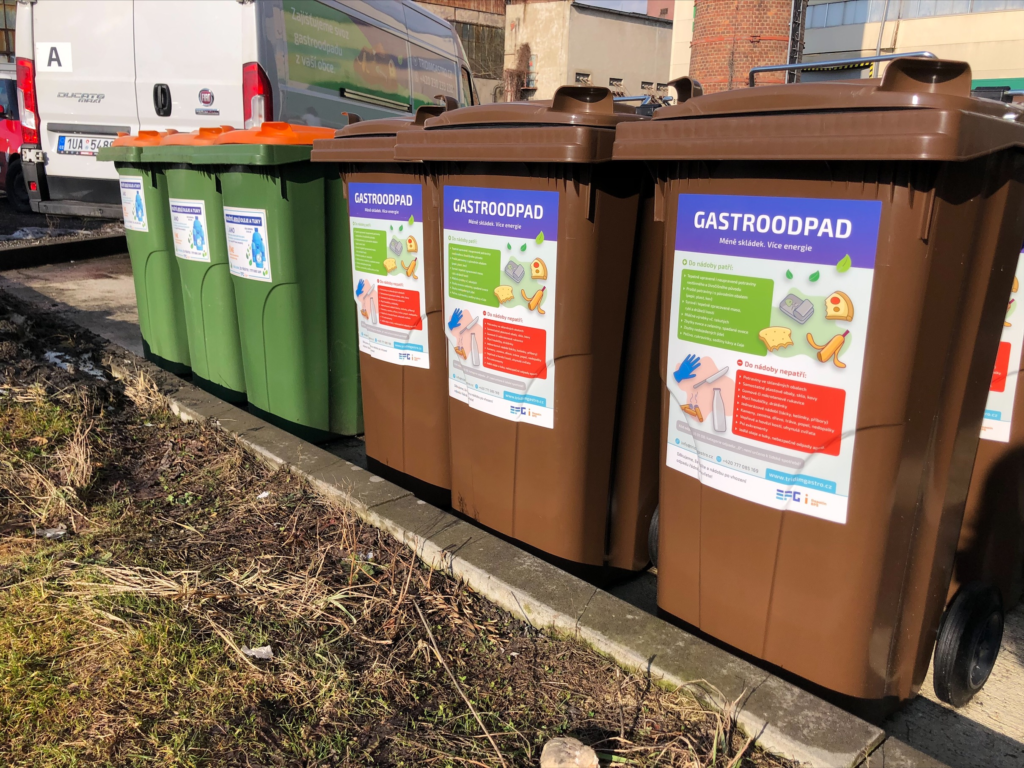
The distribution and collection of containers from towns and municipalities is provided by the “Třídím gastro” project, which is already being run by the EFG Group in five regions of the Czech Republic. This service is also provided for canteens, soup kitchens, and restaurants, where 30, 60, or 120-liter containers are collected at regular intervals or within 24 hours of notification.
The process of conversion into energy
The sorted food waste is then transported to specialized biomethane stations in Rapotín and Vyškov, where its conversion into energy begins. Organic waste is first cleaned of remaining packaging materials and shredded. Since it also contains animal components, sanitization is an integral part of its processing. During this process, all pathogens and bacteria are eliminated by heating to a minimum temperature of 70 °C for 90 minutes. The waste is then sent to a fermenter, where microorganisms decompose it without access to air. This produces biogas, which contains approximately 60% methane and 40% carbon dioxide.

Biogas can be utilized in two ways. The first option is to use it to power a cogeneration unit – a large engine that produces electricity and heat. The electricity then flows into the distribution network and the heat is used to streamline the operation of the biogas plant and to heat adjacent buildings.

The second option is to purify the biogas in an upgrading unit to produce biomethane. This can then be supplied to the gas distribution network without restriction or used as fuel for vehicles. In practice, this means that energy from food waste can power city buses, heat homes, or light public spaces.

The final output from the biogas plant is digestate, which is the substance that remains from the waste after extraction. Digestate can then be used to enrich agricultural soil as a certified mineral fertilizer.
Biogas vs. biomethane: What is the difference between them?
Although the two terms sound similar, they cannot be used interchangeably. Biogas is produced by anaerobic digestion in biogas plant fermenters, where it is produced by methanogenic bacteria. It contains approximately 60% methane, with the remainder consisting of carbon dioxide, hydrogen sulfide, ammonia, and trace amounts of other gases. Biogas can be used to power a cogeneration unit in a biogas plant to produce electricity and heat.
Biomethane is produced by purifying biogas through a membrane separation process in an upgrading unit. It contains around 97% methane and therefore has an almost identical composition to natural gas, with the difference that, thanks to the process used to produce it, it is a much less emission-intensive energy source. It can be fed into the gas distribution network and used in all gas appliances in the same way as natural gas.
Among the facilities that produce biomethane from waste in Czechia and supply it directly to the gas network are the EFG biomethane stations in Rapotín in the Šumperk region and in Vyškov. Together, they have the capacity to process 60,000 tonnes of biodegradable waste per year and produce energy from ordinary kitchen waste equivalent to the consumption of approximately 9,300 households per year.
Processing biodegradable waste in biogas plants is the most suitable option for handling this type of waste. Not only does it reduce the negative impact of landfills on the environment, but it also strengthens the Czech Republic’s energy sector. The EFG group covers the entire cycle of this process, from waste collection and processing in biogas plants to trading and supplying low-emission energy,” says Tomáš Voltr, CEO of Energy financial group.
Recycling food waste is one of the key steps towards sustainable waste and energy management. It leads to cleaner cities, a lower carbon footprint, and greater energy self-sufficiency. The journey from food scraps on your plate to the gas network may seem long at first glance, but it actually starts very simply—the moment you decide to sort your waste properly. What was once considered waste is now becoming a basic component for the production of biogas and subsequently biomethane, an environmentally friendly alternative fuel.